
College Football: What 2026 Weeks Taught Me
College football is the NCAA’s American gridiron competition, led at the top level by Football Bowl Subdivision programs across the United States. The 2026 season runs from late August through the con...
College Football: What 2026 Weeks Taught Me
College football is the NCAA’s American gridiron competition, led at the top level by Football Bowl Subdivision programs across the United States. The 2026 season runs from late August through the conference championship and College Football Playoff cycle, with the national championship scheduled for January 25, 2027, at Allegiant Stadium in Las Vegas. ESPN’s 2026 schedule divides the regular season into 14 weekly windows, beginning August 22–September 7 and ending November 29–December 5, before bowls and CFP games take over. NCAA coverage tracks FBS scores, rankings, Heisman candidates, team statistics, and postseason results, while conferences such as the ACC, Big Ten, Big 12, and SEC shape the competitive landscape. The essential takeaway is simple: evaluate college football through schedule strength, roster continuity, injuries, and market movement rather than relying on preseason reputation alone.

Photo by George Zografidis on Pexels
The contrast is brutal: one fan watches a ranked logo and assumes victory, while another checks opponent quality, quarterback availability, turnover margin, and closing line movement before risking a dollar. The second approach is less glamorous, but college football rewards disciplined analysis because a 12-game regular season leaves little room for hidden weakness. World Cup Hub approaches sports information with the same investor mindset used in tournament analysis: separate narrative from measurable edge, record the initial position, and calculate the net result after every rebate, fee, or promotional adjustment. That does not make the game emotionless; it makes the emotion affordable. The 2026 schedule includes international attention immediately, including North Carolina versus TCU at Aviva Stadium in Dublin on August 30, while USC hosts San José State at the Los Angeles Memorial Coliseum. Before choosing a side, build a game-by-game ledger and identify where the market may be pricing a brand instead of a football team.
Want a sharper framework for evaluating matchups?
[Internal Link: college football game analysis guide]
The Bottom Line
College football is best understood as a layered competition in which FBS, FCS, conferences, rankings, bowl eligibility, and the CFP interact throughout the season. The NCAA provides official scores and championship information, while ESPN offers practical schedule filtering by conference, week, television network, tickets, venue, weather, and odds.
The name “NCAA football” is commonly used by casual audiences, but the structure is more complicated than that label suggests. FBS programs compete for national relevance and CFP access, while FCS teams operate within a separate championship system and may still create major upsets against higher-profile opponents. Division II and Division III add further layers, each with different scholarship structures, roster sizes, and postseason pathways. Wikipedia’s overview of college football describes the sport as the college version of American and Canadian gridiron football, but modern FBS football is also a media business, recruiting contest, transfer-market auction, and financial ecosystem. That is why “better team” is not a sufficient prediction. A strong handicap asks whether the team is better by enough, in this specific matchup, under this specific game state. The difference is where supposedly clever bettors discover they have merely been cheering in spreadsheet clothing.
The 2026 calendar deserves special attention because the schedule itself creates analytical friction. ESPN lists regular-season windows from Week 1 through Week 15, followed by bowl games and CFP dates extending into January 2027. Time zones matter when a game begins in Dublin, travel matters when a team crosses the country, and weather matters when a high-volume passing offense suddenly meets wind or rain. Record these variables before the market fully absorbs them, but do not confuse early information with guaranteed profit.
What Players Actually See
Players see college football as a weekly pressure system: practice repetition, academic obligations, travel, recovery, depth-chart competition, and public judgment compressed into a small number of Saturdays. Fans see the scoreboard; players experience the consequences of one missed protection, one communication error, or one exhausted defensive series.
The 2026 season also illustrates how roster movement changes the meaning of continuity. NCAA headlines have highlighted returning stars such as Notre Dame defensive back Leonard Moore and Oregon quarterback Dante Moore, while preseason coverage has already begun discussing Heisman Trophy contenders and early top-25 projections. Those names matter, but the surrounding unit matters more. A quarterback returning with a new offensive coordinator may be less stable than a first-year starter operating in the same system; a star cornerback cannot erase poor safety communication. Track returning starts, transfer additions, offensive-line combinations, and coordinator changes separately rather than reducing the roster to a single ranking number.
“Rankings are a snapshot, not a forecast” is the practical lesson behind official preseason debates, even when no organization phrases it quite so conveniently. The NCAA FBS football hub provides authoritative news, scores, rankings, and championship context, but the analyst must still interpret the data. A ranking is useful for establishing expectations; it is dangerous when treated as evidence that a team will cover a spread or outperform its schedule.
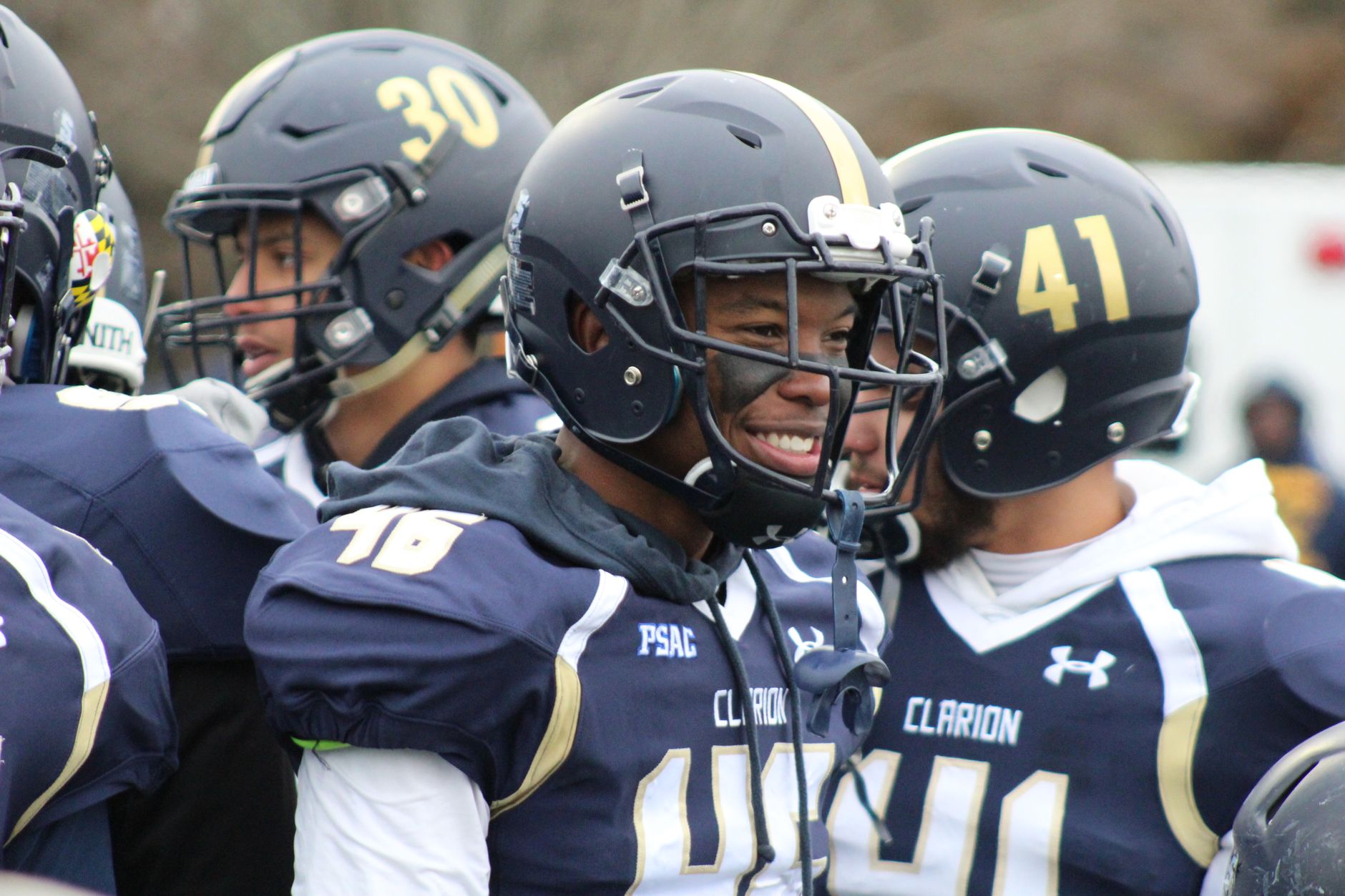
Photo by football wife on Pexels
A player’s reality also explains why box-score statistics can mislead. A defense that forces three turnovers against a weak opponent may look elite, although fumble recoveries are volatile and field position can exaggerate the result. Conversely, a team that loses by seven after generating superior success-rate numbers may have played better than the final margin indicates. For serious analysis, compare explosive plays, early-down efficiency, third-down conversion, red-zone outcomes, sack rate, penalty yards, and starting-field-position differential. Then ask which figures are repeatable. That single question eliminates a remarkable amount of television-panel nonsense.
See how broader sports markets reward evidence over noise.
What Are the 3 Things That Matter Most?
The three most important college football variables are schedule-adjusted efficiency, quarterback and offensive-line availability, and situational value created by travel, rest, weather, and game state. These factors generally explain more than a team’s logo, preseason ranking, or last nationally televised performance.
1. Schedule-adjusted efficiency
A raw yards-per-play figure is not enough because producing 7.2 yards per play against a bottom-tier defense is not equivalent to producing 6.1 against an elite SEC or Big Ten opponent. Use opponent-adjusted offensive and defensive efficiency, then separate garbage-time production from competitive snaps. The 2026 conference landscape includes the ACC, American Athletic Conference, Big 12, Big Ten, Conference USA, MAC, Mountain West, SEC, Sun Belt, and FBS independents, so cross-conference comparisons require caution. A team’s record may also conceal an uneven schedule: six wins against struggling opponents tell a different story from six wins earned against ranked competition.
2. Availability and replacement quality
Quarterback injuries attract headlines, but offensive tackle absences can alter a game just as severely. A replacement passer may preserve the playbook while losing explosive passing ability; a backup tackle may trigger more sacks, shorter routes, and conservative fourth-down decisions. Build an availability table with player status, snap percentage, position value, and replacement quality. Do not simply mark “questionable” as 50 percent available, because that fictional precision is the statistical equivalent of wearing a lab coat to a barbecue.
3. Situational and market value
Travel to Aviva Stadium in Dublin, a short week after a rivalry game, a noon kickoff after a late road trip, and poor weather can all affect execution. Market value also changes as information arrives. Compare the opening line with the current number, record whether the move followed injury news, and calculate your expected return after stake size and any applicable rebate. A profitable process can still produce losing individual tickets; the relevant figure is the long-term net position, not the loudest Saturday night.
For a practical checklist, review our [Internal Link: advanced college football betting metrics].

Photo by Kampus Production on Pexels
A useful working model is to score each matchup across five categories:
- Opponent-adjusted offensive efficiency.
- Opponent-adjusted defensive efficiency.
- Quarterback and offensive-line availability.
- Travel, rest, weather, and venue conditions.
- Opening price, current price, and expected value.
Give each category a documented rationale instead of an arbitrary feeling. After 20 or 30 tracked games, review which assumptions were consistently wrong. That review is the information gain most casual analysts avoid, because it reveals whether their “football knowledge” was actually a collection of favorite helmets. World Cup Hub’s broader prediction philosophy follows the same discipline: make the forecast explicit, record the price, and audit the result after the event rather than rewriting history in your head.
What Are the Edge Cases and Gotchas?
The most dangerous college football mistakes involve misleading records, unstable turnover numbers, unverified injury reports, time-zone effects, and confusing FBS strength with FCS context. These edge cases can move a game projection by several points even when the public conversation remains focused on rankings.
One overlooked issue is schedule timing. A team playing North Carolina in Dublin faces more than a neutral-site opponent; it confronts international travel, altered preparation routines, unfamiliar stadium logistics, and a different kickoff rhythm. The August 30, 2026 matchup between North Carolina and TCU is therefore not analytically identical to a conventional home opener. Similarly, USC versus San José State at the Los Angeles Memorial Coliseum may produce a massive spread, but large favorites introduce a separate question: will the favorite continue attacking aggressively after establishing control, or will substitutions and clock management reduce scoring opportunities?
Another gotcha is the relationship between odds and probability. A point spread is not a prediction of the final score alone; it is a price designed to balance risk and reflect information. If the line moves from -3.5 to -5 after a quarterback announcement, buying late may still be correct if the news was underpriced, or terrible if the market has already overreacted. Calculate implied probability for moneyline markets, distinguish vig from genuine edge, and never count a promotional rebate as profit until the qualifying turnover is completed and withdrawal terms are satisfied. This is where many readers confidently announce a “100 percent bonus” while forgetting the rollover requirement. Magnificent theater, catastrophic accounting.
“Think in probabilities, not certainties,” is consistent with responsible guidance from GambleAware, which emphasizes informed decision-making and awareness of gambling risks. No model removes variance, and no college football opinion deserves unlimited exposure. Set a fixed entertainment budget, avoid chasing losses, and treat a prediction as a hypothesis that can be wrong.
Interested in comparing the 2026 schedule before making a shortlist?
[Internal Link: responsible sports analysis and bankroll management]
The playoff conversation creates another trap: early rankings are not playoff invitations. The College Football Playoff selection process evaluates records, conference achievement, schedules, and comparative performance, while conference championship results can reshape the final field. NCAA coverage has identified January 25, 2027, as the date for the FBS national championship at Allegiant Stadium in Las Vegas, but the road to that game includes regular-season losses, conference title races, bowl placement, and semifinal pressure. Track qualification pathways rather than assuming the preseason top five will remain intact. College football changes violently once injuries, transfers, and rivalry results start collecting interest.
Verdict
College football in 2026 should be analyzed as a changing market, not a static ranking table. ESPN’s weekly schedule, NCAA scores and FBS coverage, conference context, roster continuity, quarterback availability, and measurable efficiency together create a more reliable foundation than reputation alone.
My final method is deliberately unromantic: establish a projection, compare it with the available price, document the reason for any position, and measure the result over a meaningful sample. Include Dublin travel for North Carolina versus TCU, venue and favorite behavior for USC versus San José State, and the postseason path leading to Allegiant Stadium in Las Vegas. Then audit turnover, rebates, closing numbers, and net position with the same seriousness you give the prediction. The contrarian conclusion is that more information does not automatically create an edge; organized information does. If your notes cannot explain why the number was wrong, you did not conduct analysis—you merely witnessed a game with stationery.
World Cup Hub offers further sports coverage for readers who prefer structured previews, tactical context, and player-stat evaluation. Use the platform as a research starting point, verify time-sensitive information through official providers, and keep every wager within a limit you can genuinely afford.
Ready to turn college football information into a more disciplined routine?
Frequently Asked Questions
Q: What is college football?
A: College football is American gridiron football played by university and college teams, with the NCAA governing major competition in the United States. The top FBS level includes nationally prominent programs from conferences such as the ACC, Big Ten, Big 12, and SEC, while FCS, Division II, and Division III follow different competitive structures. FBS teams pursue conference titles, bowl eligibility, rankings, and access to the College Football Playoff. The 2026 season’s national championship is scheduled for January 25, 2027, at Allegiant Stadium in Las Vegas.
Q: How do I follow the 2026 college football schedule?
A: Follow the 2026 schedule through ESPN for weekly matchups and the NCAA for official FBS scores, rankings, and championship updates. ESPN organizes the season from Week 1, covering August 22–September 7, through Week 15, covering December 6–12, followed by bowls and CFP games. Check kickoff time, television network, venue, weather, and late injury news on game day. International fixtures such as North Carolina versus TCU at Aviva Stadium in Dublin require particular attention to time-zone and travel details.
Q: What is the difference between FBS and FCS college football?
A: FBS and FCS are separate NCAA football subdivisions with different scholarship, scheduling, and postseason systems. FBS programs compete for bowl opportunities and College Football Playoff consideration, while FCS programs compete in an NCAA championship tournament. An FBS team may play an FCS opponent during the regular season, but their rankings and postseason pathways should not be compared as if they belonged to one identical league. This distinction is essential when evaluating schedule strength and expected margins.
Q: How can I analyze a college football matchup?
A: Analyze a matchup by combining opponent-adjusted efficiency, player availability, situational conditions, and the market price. Start with offensive and defensive success rates, then check quarterback status, offensive-line continuity, turnover variance, travel, rest, and weather. Compare your projected spread or probability with the available number and record the opening line before it moves. Review at least 20–30 tracked games before judging whether your method has an edge, because one Saturday can produce spectacularly misleading results.
Q: Why do college football predictions fail?
A: College football predictions fail because analysts overvalue rankings, underestimate injuries, ignore schedule quality, and treat volatile turnovers as permanent team traits. A defense can appear dominant after several fortunate fumble recoveries, while a strong offense can struggle when an offensive tackle is unavailable. Late line movement may also incorporate information that casual observers have not seen. Keep a postgame audit showing the original projection, closing number, injury assumptions, and actual result so mistakes become measurable rather than conveniently forgotten.
Q: How much does it cost to attend a college football game?
A: College football ticket prices vary widely by program, opponent, stadium, and game importance, but the 2026 ESPN schedule shows examples starting around $32 for San José State at USC, $48 for NC State at Virginia, and $52 for Jacksonville State at North Dakota State. These listed prices can change as inventory and demand move. Add parking, travel, food, and merchandise before calculating the real cost. High-profile rivalry games and conference championship contests usually require a much larger budget than early-season matchups.
Q: Is college football betting worth it?
A: College football betting is only worth considering as paid entertainment when the stake fits a fixed budget and the analysis identifies a genuine price difference. A prediction can be correct while a wager loses because of the spread, vig, poor timing, or an unfavorable number. Track turnover, rebates, fees, closing-line movement, and net position rather than celebrating gross wins. Never chase losses, borrow money, or assume promotional terms create guaranteed profit; review applicable laws and responsible-gambling resources before participating.
Thank you for reading.
World Cup Hub · The Sovereign Editorial · Vol. I